HVAC Sizing and Manual J for Pasadena Homes
The short answer: Size a Pasadena Mitsubishi system off a room-by-room Manual J load calculation, not off square footage, because the Zone 9 foothill heat and those old single-pane Craftsman windows rewrite the math. Call (213) 444-4051 or book online and Pasadena Mitsubishi HVAC runs the load across the 91101 to 91107 ZIPs so the unit does not short cycle and waste energy.
Fast facts
- Manual J weighs insulation, windows, orientation, ceiling height, air leakage, and local design temps.
- Go oversized and the system short cycles, grinds the compressor, and pulls humidity poorly.
- Planning ballpark only: 1 ton per 500-700 sq ft in Zone 9; real load comes from Manual J.
- Pasadena Zone 9 design heat and original single-pane windows raise the per-room load.
- Right sizing protects efficiency and inverter compressor life.
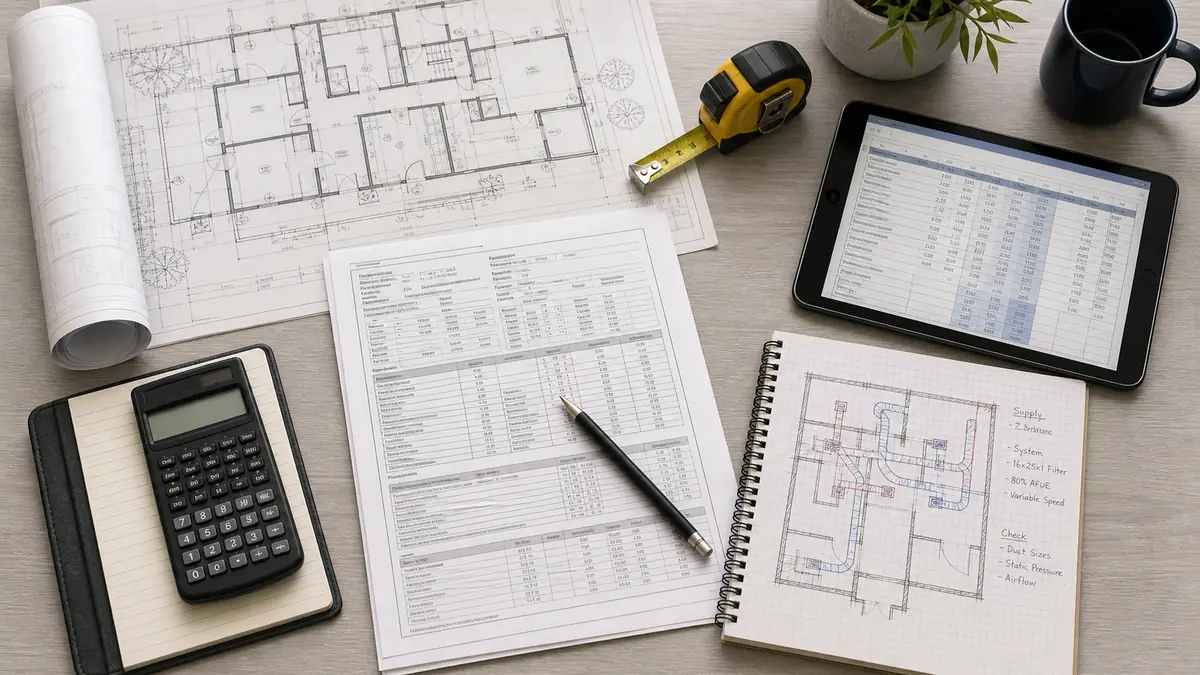
Why does sizing matter so much?
In older houses the mistake we see again and again is oversizing - bolting on a bigger unit because more capacity feels like the safe bet. It runs the wrong way entirely. An oversized air conditioner drives the room to setpoint inside a couple of minutes and then cuts out, long before it has pulled the moisture from the air or settled the whole space evenly. Let the room drift warm and it kicks on again. That on-off-on pattern is short cycling, and it chews up the compressor, throws energy away, and hands you a damp, patchily cooled house.
An undersized unit has the opposite problem - it runs constantly and never quite catches up on a 95 F foothill afternoon. The right size runs steadily, holds a stable temperature, and lets a Mitsubishi inverter compressor do what it is designed for: modulate down to a low, efficient speed and stay there. Getting that right is the whole game, and it starts with a real load calculation.
What is Manual J, and what goes into it?
Manual J is the accepted load-calculation method for homes. Rather than guess off floor area, it tallies up the real heat gains and losses of your particular house, one room at a time. The inputs that swing the number hardest here in Pasadena:
- Windows - area, orientation, and glazing. A west-facing room of original single-pane Craftsman windows gains far more afternoon heat than a shaded north room.
- Insulation - many 1900-1930 Bungalow Heaven homes have minimal wall insulation, raising the load.
- Ceiling height - tall old-house ceilings add volume to condition.
- Air leakage - original doors, windows, and framing leak more than a modern tract house.
- Local design temperature - Pasadena's Zone 9 foothill heat, not a generic national figure.
How does this translate to Mitsubishi equipment?
Once we have the load, we match it to the right indoor head and outdoor capacity. Undersizing leaves you hot; oversizing brings back the cycling problem. Here is how loads map to typical Mitsubishi choices.
| Space | Rough load | Typical Mitsubishi fit |
|---|---|---|
| Single bedroom (well shaded) | 6,000 - 9,000 BTU | MSZ-FX or MSZ-GL 6k-9k head |
| West-facing room, single-pane | 9,000 - 12,000 BTU | MSZ-FS 9k-12k head |
| Open living/kitchen | 12,000 - 18,000 BTU | MSZ-FS 12k-18k head |
| Whole bungalow, 3-4 rooms | 24,000 - 36,000 BTU | MXZ/MXZ-SM multi-zone |
These are planning figures to set expectations, not a substitute for the calculation. Two homes of identical square footage can land a full ton apart once windows and insulation are counted.
A worked example: one Bungalow Heaven bedroom
Numbers make this concrete. Take a 12 by 14-foot upstairs bedroom in a 1915 Craftsman - 168 square feet, nine-foot ceiling, two west-facing original single-pane double-hung windows totaling about 30 square feet, minimal wall insulation, and the leaky envelope an old house brings.
Off square footage alone, the lazy rule says one ton per 500 to 700 square feet, which would call this room maybe a third of a ton - around 4,000 BTU. That is wrong for this room. Run the real factors and the heat gains stack up: roughly 6,000 BTU through that west glass on a Zone 9 afternoon, another 2,000 to 3,000 through the under-insulated walls and ceiling, plus infiltration and the people and a couple of devices in the room. The Manual J load lands closer to 9,000 BTU - more than double the square-foot guess. So this room gets a 9k MSZ-FX or MSZ-GL head, not a 6k one, and certainly not a 12k that would short cycle. Swap the same room to north-facing, shaded, with replacement dual-pane windows, and the load can drop back toward 6,000 BTU. Same square footage, very different equipment - which is exactly why we measure rather than guess.
The oversizing failure chain
The damage from an oversized head is not the extra dollars on the invoice - that is the smallest part of it. The real cost is a sequence of failures that dog the system for as long as you own it, and in a leaky Bungalow Heaven bedroom it unfolds like this:
- The oversized head drives the room to setpoint in a couple of minutes and shuts off - long before it has run long enough to pull humidity out of the air.
- The room drifts warm, the unit kicks back on, and you get short cycling: many short, hard runs instead of long steady ones.
- Each restart is the hardest moment for the inverter compressor, so the wear piles up and pushes the unit toward an early U6 fault.
- Because runs are short, the coil never sustains the low temperature that wrings out moisture, so the house feels clammy even though the thermostat reads cool.
- And efficiency drops: an inverter is most efficient holding a low, steady speed, which an oversized unit never gets to do.
An undersized unit has the opposite failure - it runs flat out and never catches up on a 95 F foothill afternoon - but in older homes the far more common mistake, by a wide margin, is oversizing.
Rule of thumb versus Manual J
The square-foot rule of thumb (one ton per 500 to 700 square feet here) is fine for a back-of-envelope guess at how many heads a house wants - one, or three. It is not fine for picking the actual capacity, because it ignores everything that swings the real load: window area and orientation, glazing, insulation, ceiling volume, air leakage, and Pasadena's design temperature. Two identical 1,400-square-foot bungalows can land a full ton apart once those are counted - one shaded with upgraded windows, the other west-facing with original single-pane glass. Manual J is simply the method for counting them properly, room by room, so the equipment matches the house instead of a national average.
What Pasadena's design conditions add
Sizing is anchored to a design temperature - the hot-day target the system is built to hold - not the rare record high. Pasadena sits in Title-24 Climate Zone 9 on the San Gabriel foothill floor, where the range bottles afternoon heat against the mountains and Santa Ana events push past 100 F. That cooling-dominant Zone 9 design condition runs hotter than the coastal Zone 8 cities to the west, so the same room carries a heavier cooling load in Pasadena than it would near the beach. We size off local design conditions rather than a generic figure, which is why a Pasadena head is often a notch larger than the same room would need on the coast - and why an installer who reuses a coastal rule of thumb gets it wrong here.
Does Title-24 affect a Pasadena install?
It can, and it is worth knowing before the quote. California's Title-24 energy code governs new and altered HVAC, and in cooling-dominant Zone 9 it commonly triggers HERS field verification - independent third-party checks of refrigerant charge and airflow on new and replacement split systems, and duct sealing verification when ducts are altered. Pure ductless retrofits sidestep the duct-sealing piece because there are no ducts, but a charge-and-airflow verification can still apply. The exact triggers depend on the equipment class and the current code cycle, so we confirm what applies to your specific job rather than promising or skipping a verification you may need.
What about multi-zone sizing?
Multi-zone systems add a wrinkle: the outdoor MXZ has a rated capacity, and the heads connected to it should not wildly exceed it under simultaneous load. We size each zone to its room, then pick the smallest MXZ-SM that comfortably covers the realistic combined demand - not every head runs at full tilt at once. Oversizing the outdoor unit here costs money and hurts low-load efficiency. See multi-zone systems for the platform details.
The bottom line, in five checks
When you are weighing a Pasadena ductless quote, these tell you whether the sizing was done right:
- A real load calculation. The installer ran a room-by-room Manual J, not a square-foot guess off the floor plan.
- Windows counted. Orientation and glazing are in the math - west-facing single-pane glass should push the load up.
- Local design temperature. The numbers use Pasadena's Zone 9 design heat, not a generic national figure.
- No reflexive oversizing. Each head matches its room; a head two sizes too big is a short-cycling problem waiting to start.
- Multi-zone balanced. The outdoor MXZ is sized to the realistic combined load, not the sum of every head at full tilt.
If a quote skips the load calculation and sizes off square footage alone, ask why before you sign.
Putting it to work
Right-sizing is the difference between a system that runs quietly for 15 years and one that cycles itself to an early grave. The whole point is a number matched to your actual house: the right indoor head capacity per room, an outdoor condenser sized to the realistic combined load, and confidence that the equipment will run long and steady rather than in short, wearing bursts. We do the load calculation as part of the quote, walk you through where each head lands, and write the sizing down so you can see why the unit is the size it is.
When you are ready to install, see ductless installation or heat pump installation. Deciding whether to replace at all? Run the numbers in the repair-or-replace guide, and if cycling is your current complaint, read short cycling.
Common questions
What is a Manual J load calculation?
Manual J is the trade's accepted way of pinning down precisely how much heating and cooling a house calls for, worked out room by room. The math weighs floor area, insulation, the size and direction your windows face, ceiling height, how much air the place leaks, and the design temperatures for your spot. That is how we land on the right Mitsubishi size instead of eyeballing it off square footage.
Why is an oversized AC a problem?
Too much capacity chills the air in a hurry but quits before it has wrung out the humidity or evened out the house, so it keeps stopping and starting, grinds on the compressor, and leaves you with warm pockets and cold pockets. Drop an oversized head into a snug Bungalow Heaven bedroom and it does worse than a right-sized one. Inverters put up with it more gracefully than old AC did, but sizing it correctly still beats every workaround.
How many BTUs does a Pasadena bungalow need?
No one figure fits, because two 1,400 sq ft bungalows can carry very different loads once you account for insulation, glass, and shade. For rough planning we figure one ton (12,000 BTU) per 500 to 700 sq ft in this climate, but that is only a starting ballpark - the honest number comes off a Manual J run on your particular house.
Does Pasadena's foothill heat change the sizing?
Plenty. Between Pasadena's Zone 9 design temperature and the heat that piles up against the foothills, a room facing south or west behind original single-pane glass draws a much heavier cooling load than the same room would sitting near the coast. We size off local design conditions rather than some one-size national figure, so the equipment is matched to an actual Pasadena afternoon.